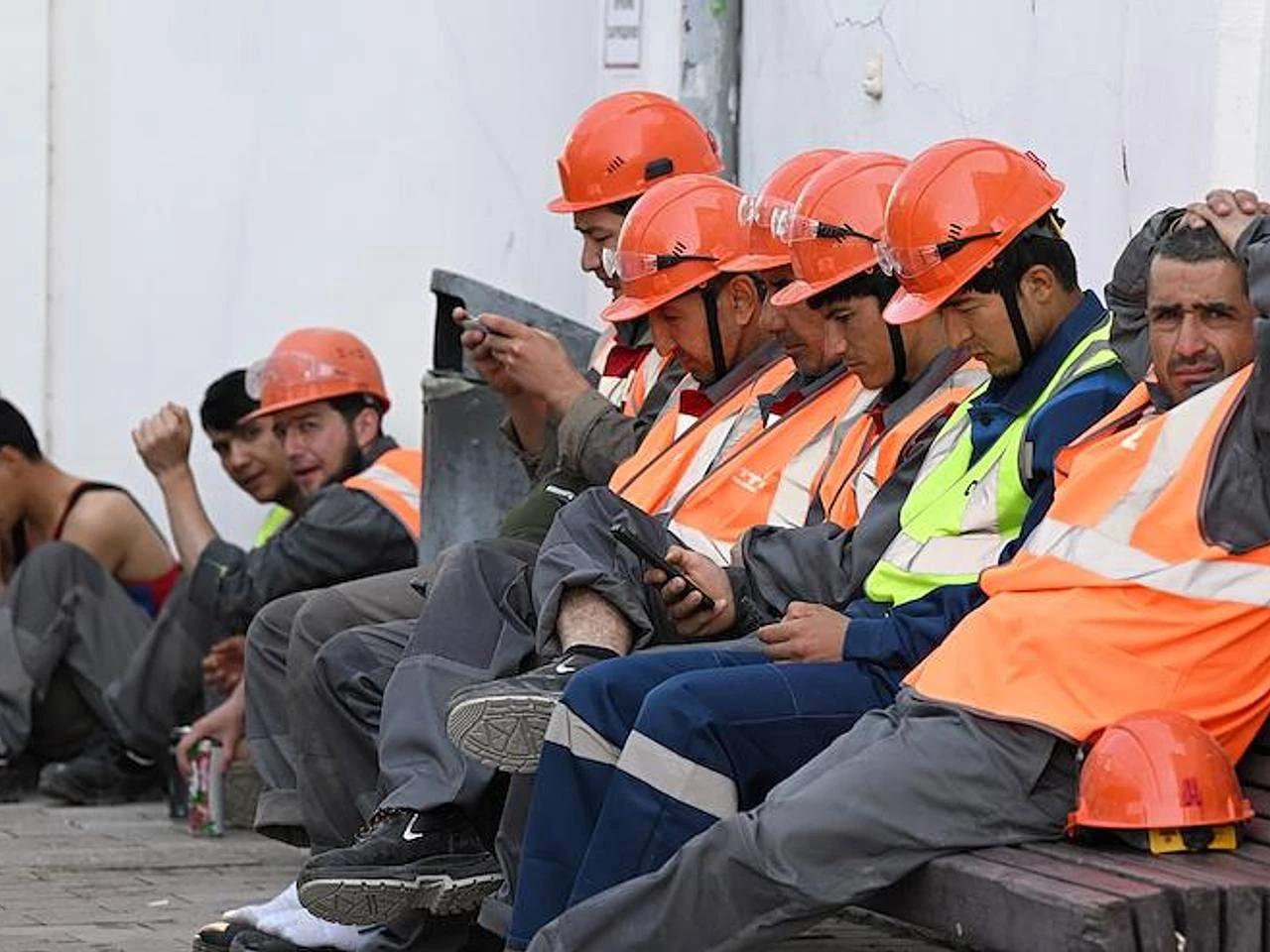
The Russian government has prepared a new draft restricting the use of foreign labor in various sectors of the economy. This document includes federal-level limits and special bans for certain regions. Employers are required to bring the number of foreign employees at their enterprises into compliance with the new rules by January 1, 2027.
According to the limits set on a federal scale, the share of foreign workers in the construction and catering sectors is intended to be set at up to 50 percent, in vegetable growing, forestry, and woodworking at up to 40 percent, in freight and passenger transport at up to 24 percent, in building maintenance at up to 70 percent, and in the sports sector at up to 25 percent.
Also, complete sectoral bans are being introduced in certain regions. In particular, taxi and passenger transport services will be closed to foreigners in Tatarstan, Udmurtia, Chuvashia, Krasnodar Krai, and the Novosibirsk, Kaluga, Tver, Tula, Orenburg, Ulyanovsk, and Jewish Autonomous regions. In the freight transport sector, restrictions are also being set in Mordovia, Udmurtia, Chuvashia, Krasnodar Krai, and the Novosibirsk and Tver regions.
In the defense industry, aviation, and the production of unmanned aerial vehicles, a complete 0 percent ban on foreign labor has been introduced in the Samara and Sverdlovsk regions. In the education sector, the employment of migrants is prohibited in Chuvashia and the Vologda, Kaluga, and Orenburg regions. In the construction sector, limits vary from 30 to 80 percent depending on the region.
Separate quotas have been set for the city of Moscow, according to which a 50 percent limit applies to vegetable growing, forestry, and woodworking, and a 15 percent limit applies to the retail sale of alcoholic beverages and tobacco products.