Although more than 30 years have passed since the former Soviet republics gained independence, the level of development and public welfare in this economic space is evolving differently. Due to differences in economic growth rates, exchange rates, and tax policies, significant disparities have emerged between the real incomes of citizens.
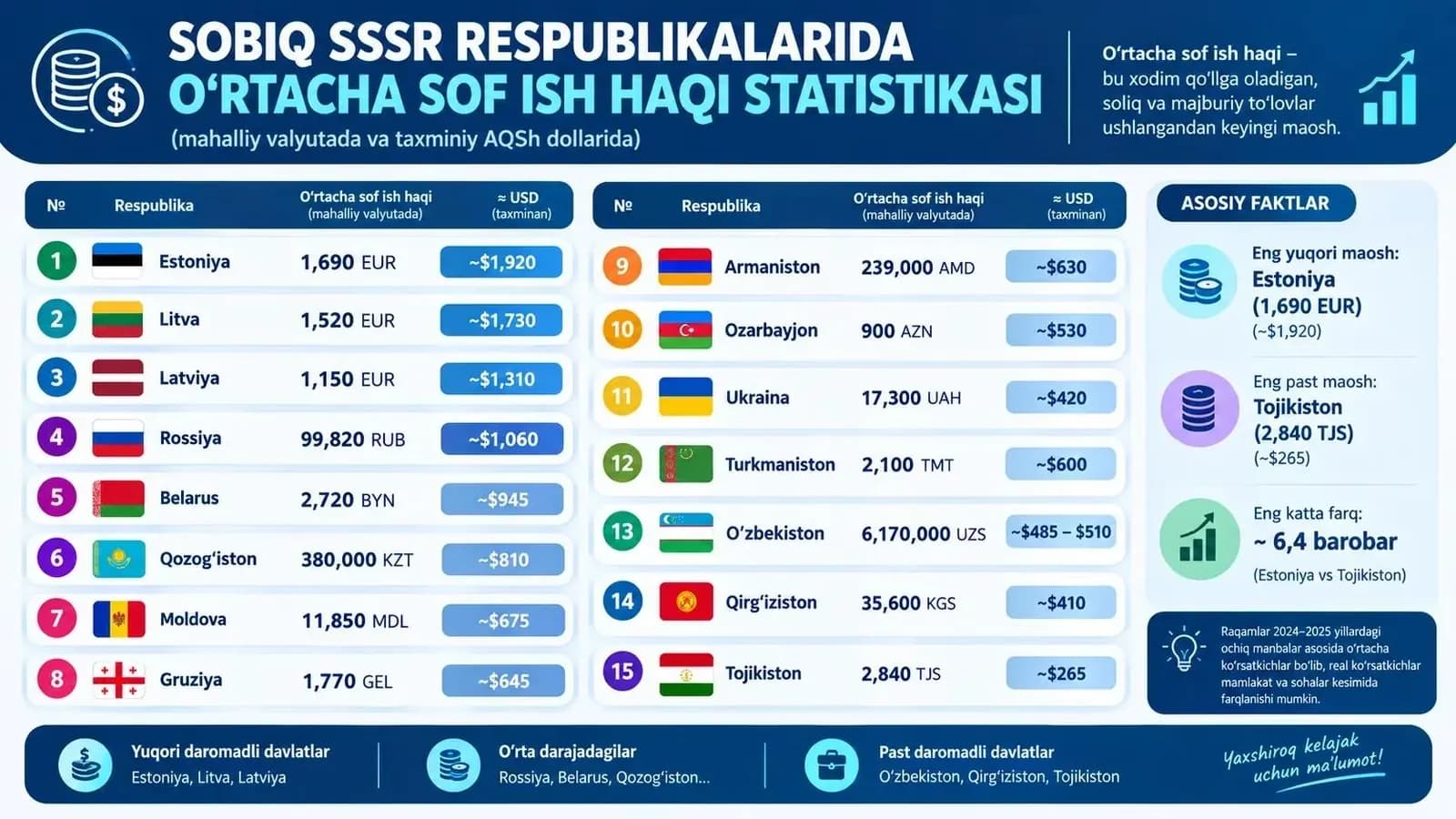
According to data from the international statistical platform "Wage.is" for 2026, a ranking of the average net monthly salary that an employee receives after all mandatory taxes and insurance contributions have been deducted in the former Soviet republics has been published.
- Estonia: 1,690 EUR (~$1,920) - Lithuania: 1,520 EUR (~$1,730) - Latvia: 1,150 EUR (~$1,310) - Russia: 99,820 RUB (~$1,060) - Belarus: 2,720 BYN (~$945) - Kazakhstan: 380,000 KZT (~$810) - Moldova: 11,850 MDL (~$675) - Georgia: 1,770 GEL (~$645) - Armenia: 239,000 AMD (~$630) - Azerbaijan: 900 AZN (~$530) - Ukraine: 17,300 UAH (~$420) - Turkmenistan: 2,100 TMT (~$600) - Uzbekistan: 6,170,000 UZS (~$485 – $510) - Kyrgyzstan: 35,600 KGS (~$410) - Tajikistan: 2,840 TJS (~$265)
The 2026 ranking shows that economic polarization in the post-Soviet space is intensifying. A citizen of Estonia, who receives the highest salary, earns almost 7 times more net income than a citizen of Tajikistan, who has the lowest indicator. However, economists emphasize the need to pay attention not only to the nominal salary but also to prices in each country's domestic market, utility bills, and the cost of living (purchasing power parity).